
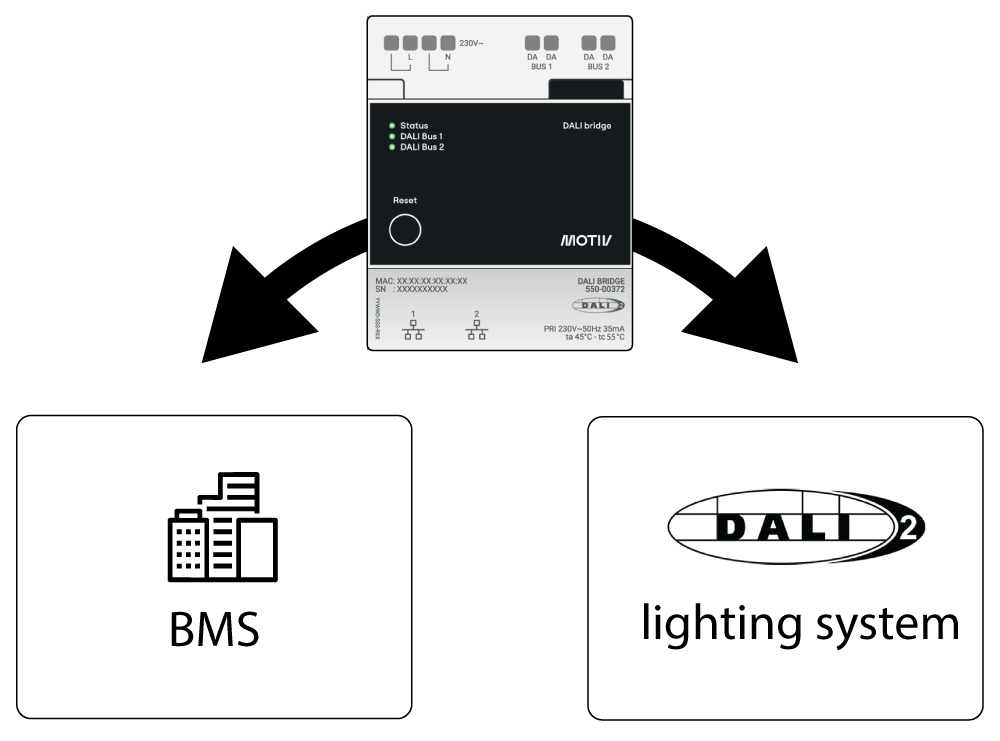
Bridge the gap between the BMS and the lighting system
It basically forms a bridge between the lighting system and the BMS.
To know the basics of a BMS, go here: What is a BMS?
To know more about the Niko Lighting System, go here: Niko Lighting system
Enable sharing and using occupancy sharing
The DALI bridge enables the sharing of energy and occupancy data with the BMS, as specified by EU building regulations (EU 2024/1275). It provides tools to monitor, control, and optimise lighting performance across the building through the BMS.
This integration is driven by the European Energy Performance of Buildings Directive (EPBD), which requires many commercial buildings with a high overall energy demand to implement a BMS. In addition to monitoring and controlling HVAC systems and other building services, the BMS must also be able to monitor the lighting installation, including its energy consumption and fault status, and support centralised lighting control.
The DALI bridge exchanges lighting data and control commands while maintaining the autonomous operation of the DALI application controller integrated in the master detector. This eliminates the need for a separate application controller and simplifies system commissioning.
Allow the BMS to take action
When connected to the MOTIV DALI bridge, the BMS can:
-
Switch luminaires on and off
-
Adjust lighting levels
-
Configure PIR off-delay times
-
Set required lux levels
-
Monitor energy consumption, occupancy, and movement data
-
Read diagnostic and fault information for commissioning and maintenance purposes